2026 Outdoor Living Trends for Arizona Backyards
Outdoor living design in Arizona has matured considerably over the last few years. The Valley has moved away from treating the backyard as a pool with some furniture around it, toward designing it as genuine additional living space. Here's where things are heading in 2026.
Shade Is Leading the Design, Not Following It
The most significant shift is the order of decisions. Shade structures used to be an add-on considered after the pool and patio were set. Increasingly, homeowners are designing the shade first and arranging everything else around it — because that's the element that determines how many hours the yard is usable. Larger ramadas, deeper overhangs, and louvered systems that adjust seasonally are all seeing strong demand.
Outdoor Kitchens Built for Actual Cooking
The built-in grill island has evolved into something closer to a real kitchen. Homeowners are specifying more counter space, dedicated prep zones, under-counter refrigeration, and increasingly a second heat source — a flat top, pizza oven, or side burner. The driver is straightforward: people who cook outside several times a week outgrow a grill and eighteen inches of counter very quickly.
Bar seating along the island has become close to standard. It puts guests in conversation with whoever is cooking rather than stranding them at a table across the patio.
Warmer, Softer Material Palettes
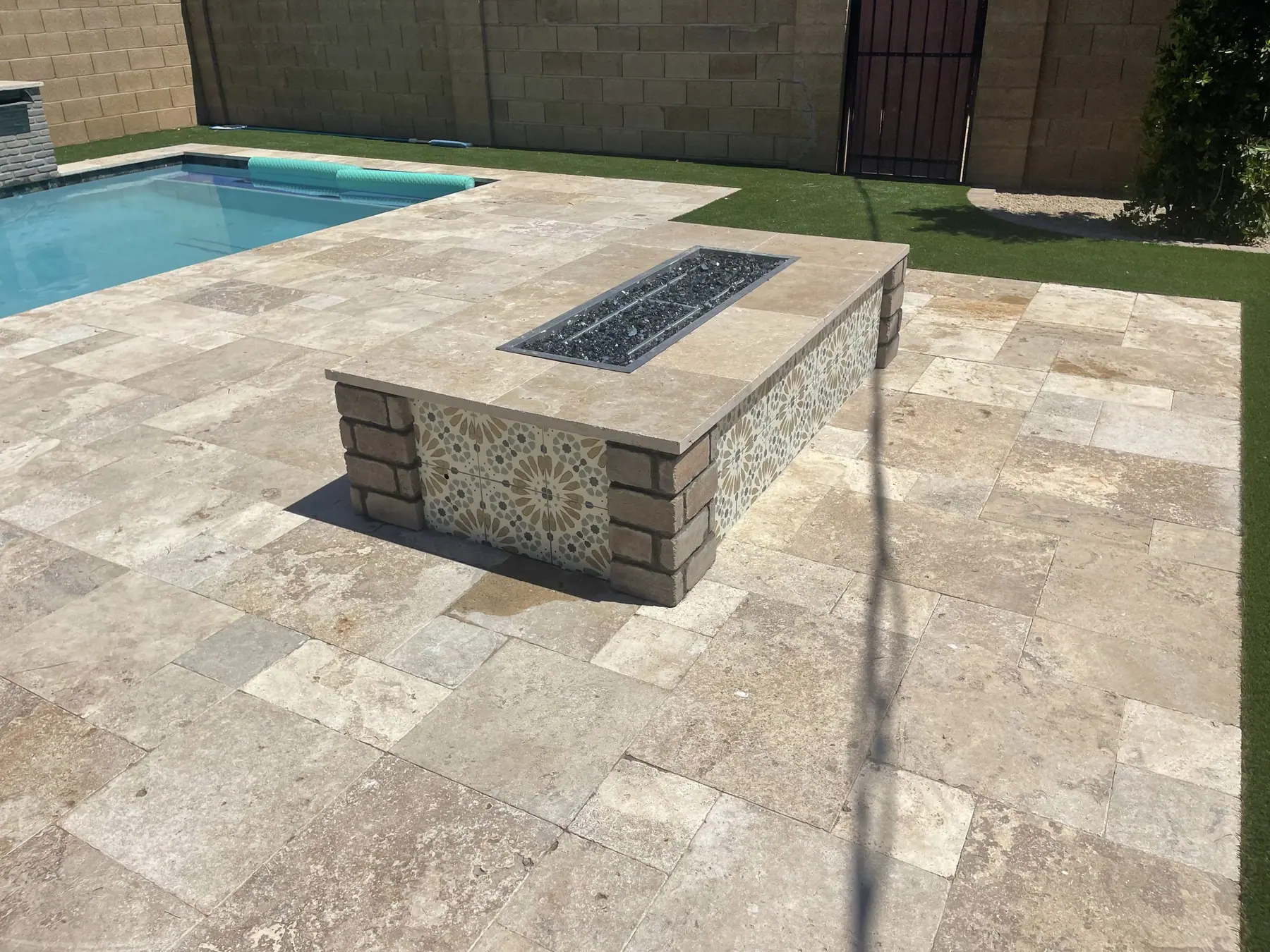
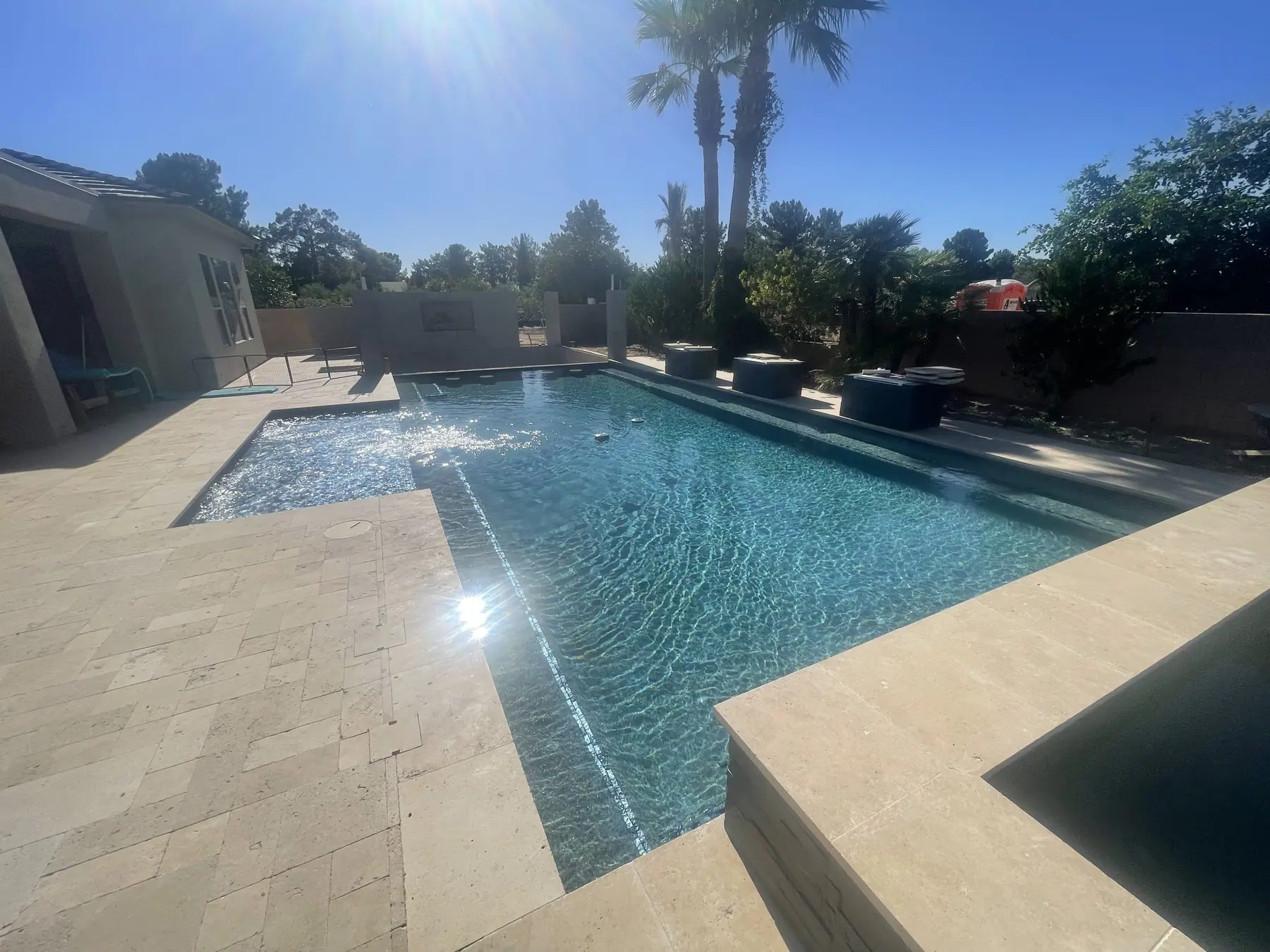
The stark gray-and-white palette that dominated for years is giving way to warmer tones — travertine in creams and walnut shades, sandstone, warmer-toned pavers, and wood or wood-look ceiling treatments under ramadas. The practical advantage in this climate is that warmer, lighter materials both look better against desert planting and stay cooler than the charcoal tones they're replacing.
Zoned Backyards
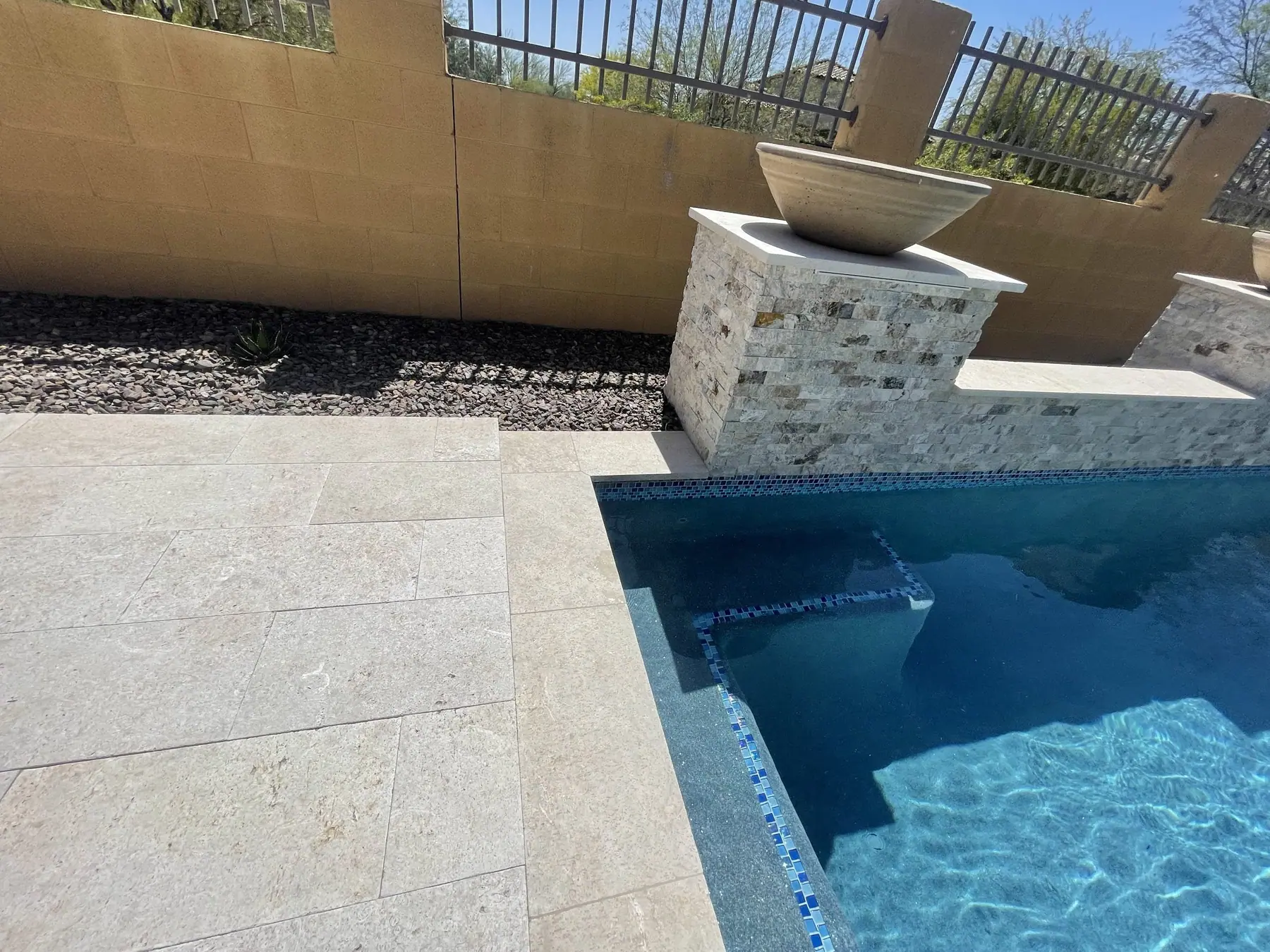
Rather than one large undifferentiated patio, designs are increasingly broken into distinct zones — a shaded dining area, a fire and conversation area, a turf zone for kids or dogs, and a quieter corner with a water feature. Level changes, seat walls, planters, and surface transitions define the boundaries without walls, which makes even a modest yard feel considered rather than sparse.
Fire as a Winter Anchor
Fire features continue to gain, and the reason is seasonal usability. A well-placed fire table or built-in fireplace turns the coldest months into some of the most-used time in an Arizona backyard. Linear gas tables suit contemporary designs; full masonry fireplaces are appearing in larger yards as the anchor of a dedicated seating zone.
Lower-Water Landscape as a Design Choice
Desert-adapted planting has shifted from a compromise to a deliberate aesthetic. Sculptural agaves and ocotillo, ornamental grasses that catch low afternoon light, layered boulder placements, and multi-trunk desert trees are being specified because they look right in this landscape — with the reduced water use as a welcome side effect rather than the sole justification.
Turf Used Deliberately
Artificial turf continues to expand, but placement has grown more sophisticated. Rather than replacing an entire lawn, homeowners are using defined turf zones — a play area, a pet run, a putting green — integrated into hardscape with clean transitions, and often positioned in shade where the surface stays comfortable.

AZ Outdoor Concepts
Phoenix's outdoor living, hardscape, and landscape contractor. A small, family-owned business led by Shawn Walker with over 18 years of experience turning ordinary Arizona backyards into shaded, usable, year-round living space.
Related Services
Planning a outdoor living project?
Get a free consultation and estimate from the Phoenix area's trusted outdoor living, hardscape, and landscape contractor.