Travertine vs. Pavers vs. Concrete: The Best Patio Surface for Arizona Heat
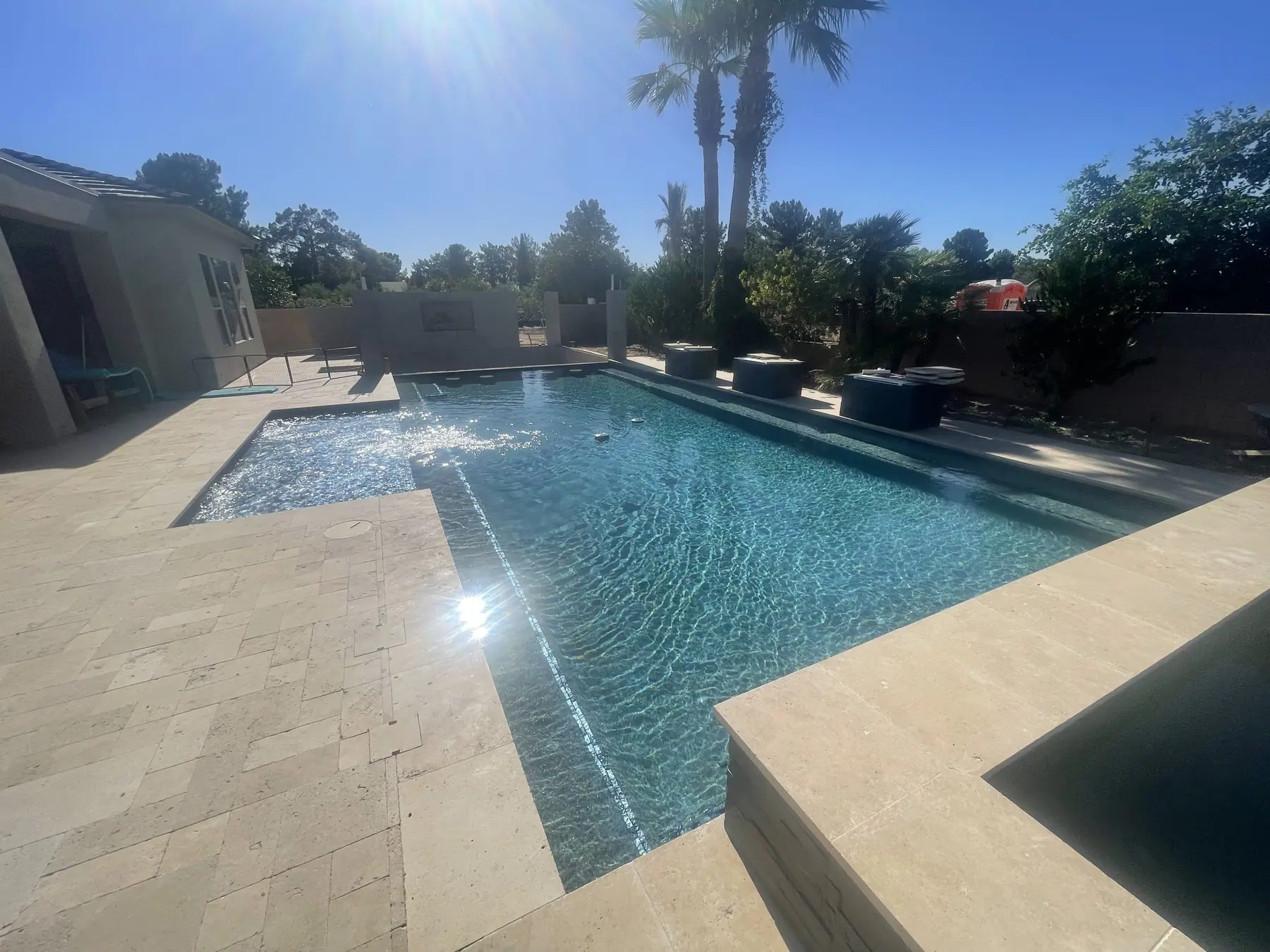
The surface you choose for a Phoenix patio or pool deck affects comfort more than any other single material decision. In a climate where ground surfaces routinely reach temperatures that make barefoot walking genuinely painful, the difference between options is not cosmetic. Here's how the three most common choices actually compare.
Travertine
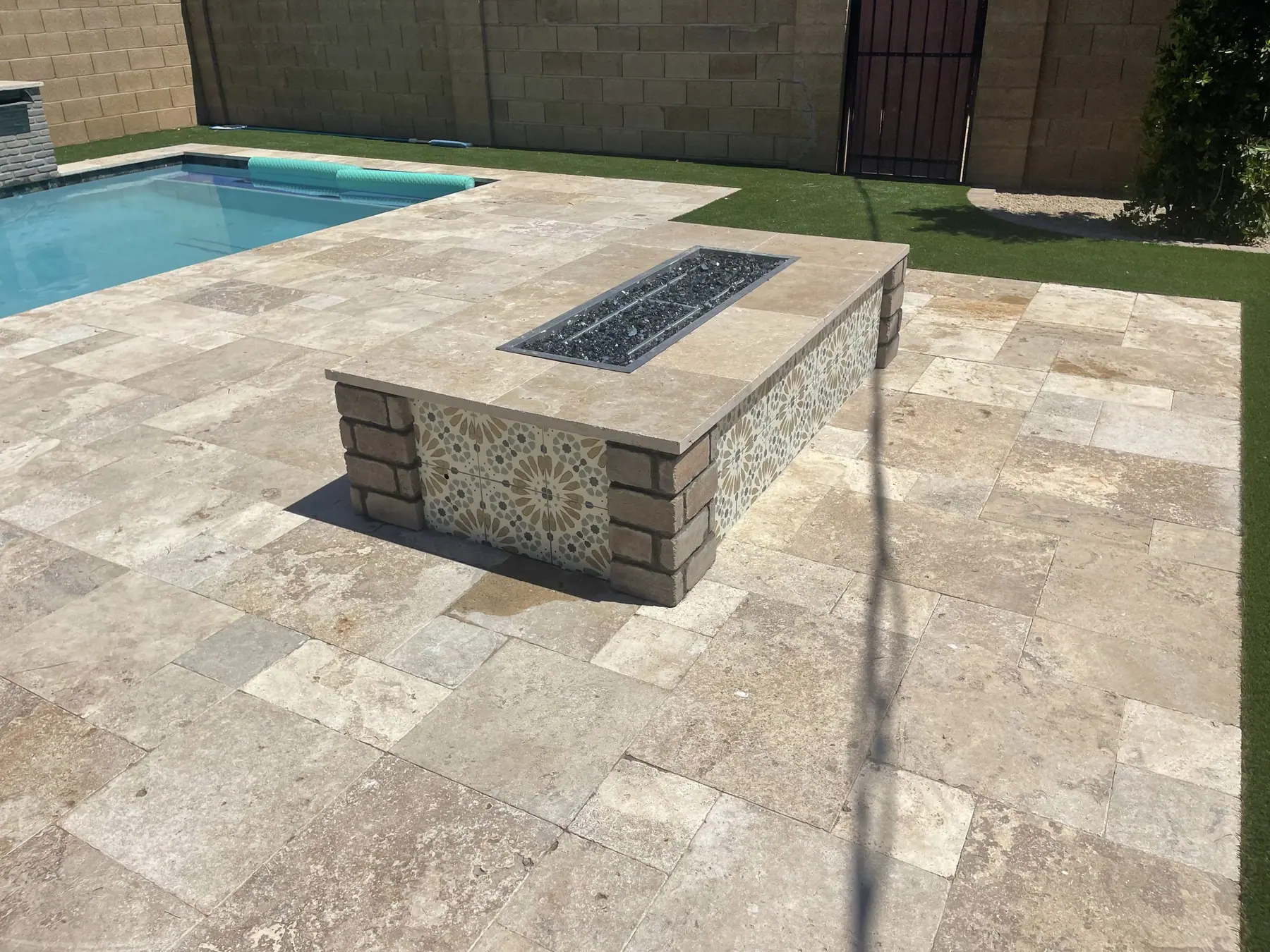
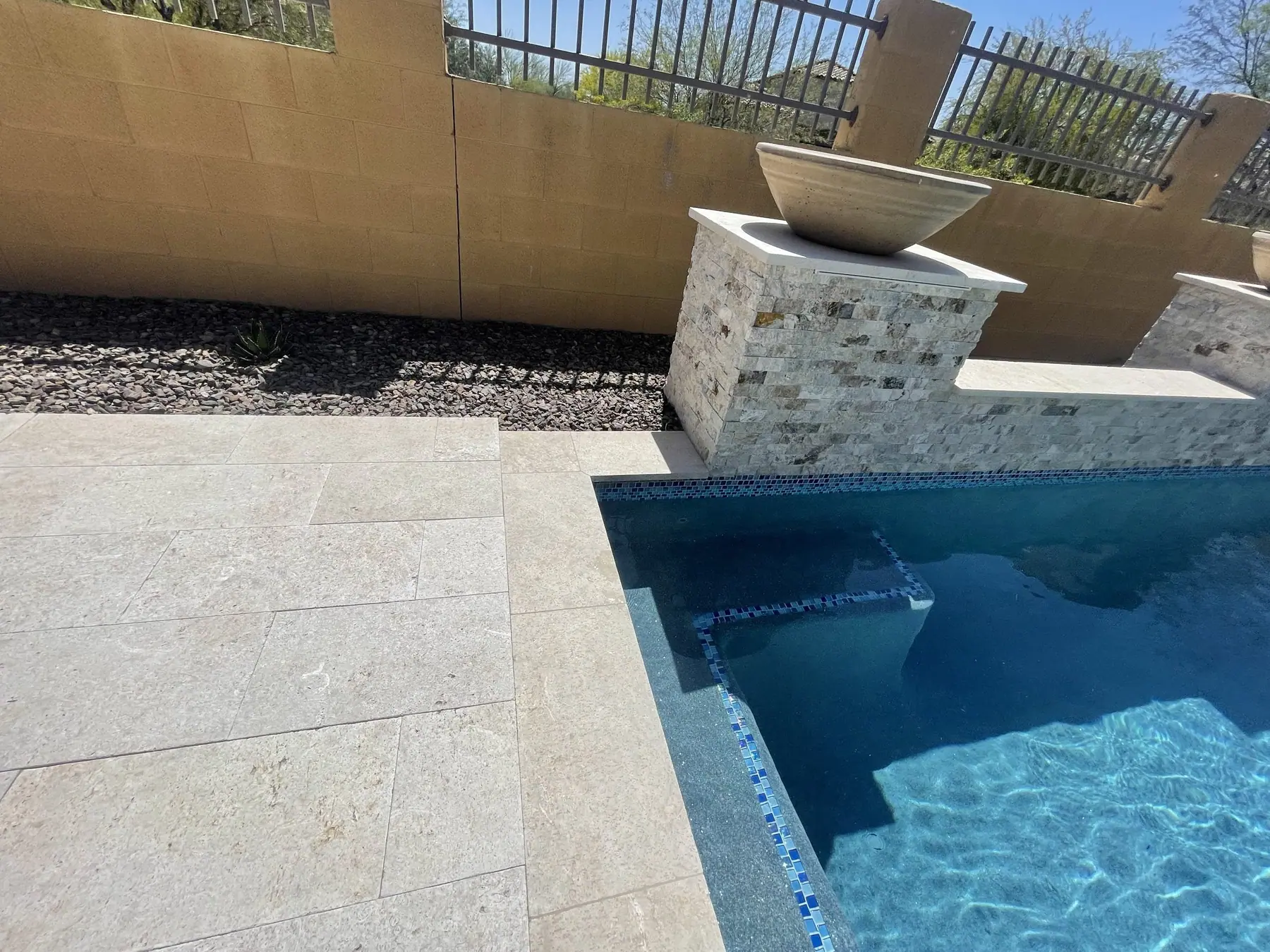
Travertine is a natural stone with a porous structure and typically light coloration, and it stays noticeably cooler underfoot than the alternatives. That single property is why it dominates pool decks and patios across the Valley. It also has a soft, matte texture that doesn't produce the harsh glare light concrete does in full sun.
The tradeoffs are real. It costs more than concrete pavers. Its porosity means spills can stain if left, and our hard water can leave mineral deposits. It's a natural material, so color varies from pallet to pallet — most people consider that a feature, but it does mean the finished surface won't be perfectly uniform.
Concrete Pavers
Concrete pavers give you the widest range of colors, shapes, and laying patterns, and they're strong enough for driveways and vehicle loads. Because each unit is individually set, a stained or cracked piece can be lifted and swapped without touching the rest of the surface — a genuine advantage over any monolithic surface.
On heat, pavers land between travertine and poured concrete, and color drives most of the difference. A light-toned paver performs reasonably well; a dark charcoal one gets punishingly hot. If you're set on a darker paver, put it where people wear shoes.
Poured Concrete
Poured concrete is the cheapest option up front and the most common existing surface on Valley homes. It's also the one homeowners most often want to replace. It stores and radiates heat, produces significant glare in light finishes, and — the decisive issue — it cracks. Not sometimes: our soil movement and thermal cycling mean control joints only determine where cracks appear, not whether they do. Once a slab cracks or settles, repair options are limited and rarely invisible.
Stamped and stained concrete adds pattern at moderate cost, but darker stains make the heat problem worse and the coating requires periodic resealing to keep its color.
Drainage and Base
This gets less attention than material choice and matters just as much. Pavers and travertine are set over a compacted aggregate base with sand joints, so water can move through the joints and through the base. Poured concrete sheds everything to its edges, which during a monsoon means a large volume of water arriving somewhere fast — often against the house if the slope was never right.
Whichever surface you choose, the base underneath determines its lifespan. Proper excavation depth, aggregate installed and compacted in lifts, a screeded bedding layer, and edge restraint are what keep a paver surface flat for decades. Thin base and no edge restraint are why so many Valley patios develop that wavy, sunken look within a few years.
Which One to Choose
For pool decks and any surface used barefoot, travertine is the clear winner on comfort and the reason most of our clients choose it. For driveways, entries, and high-traffic areas where shoes are the norm, concrete pavers offer better value and load capacity. Poured concrete makes sense mainly for utility areas, side yards, and equipment pads where appearance and barefoot comfort don't matter.

AZ Outdoor Concepts
Phoenix's outdoor living, hardscape, and landscape contractor. A small, family-owned business led by Shawn Walker with over 18 years of experience turning ordinary Arizona backyards into shaded, usable, year-round living space.
Related Services
Planning a pavers & hardscaping project?
Get a free consultation and estimate from the Phoenix area's trusted outdoor living, hardscape, and landscape contractor.