How to Design a Phoenix Backyard You'll Actually Use Year-Round
Arizona gives you some of the best outdoor weather in the country. From October through May the evenings are close to perfect, and yet an enormous number of Valley backyards go essentially unused for most of the year. The reason is rarely the climate. It's that the yard was assembled one purchase at a time — a patio slab here, a fire pit there, a grill rolled into a corner — without anyone asking the basic question of when, exactly, the family is supposed to be out there.
Start With the Hours You Want to Reclaim
Before choosing a single material, decide which hours you're designing for. Summer mornings before nine. Fall and spring evenings. Winter afternoons in full sun. Each of those calls for something different, and a yard that tries to serve all of them equally usually serves none of them well. Most Phoenix homeowners get the best return from prioritizing shaded evening use spring through fall, then adding a heat source that extends the winter.
Shade Is the First Purchase, Not the Last
Shade is what determines whether the rest of the backyard gets used, and it is consistently the thing people defer. An uncovered patio in the Valley is unusable for a large share of the year regardless of how nice the surface underneath it is. A solid-roof ramada gives the deepest shade and lets you mount fans and lighting overhead. Louvered pergolas let you dial light in and out by season. Shade sails are the budget entry point and work well over play areas and turf.
Placement matters as much as structure type. Afternoon sun in Phoenix comes from the west and southwest at a low angle, which means a roof directly overhead does less than people expect after about four in the afternoon. Planning for that — with a deeper overhang, a west-side screen, or a well-placed tree — is the difference between a patio that works at 5pm in September and one that doesn't.
Surface Temperature Changes Everything
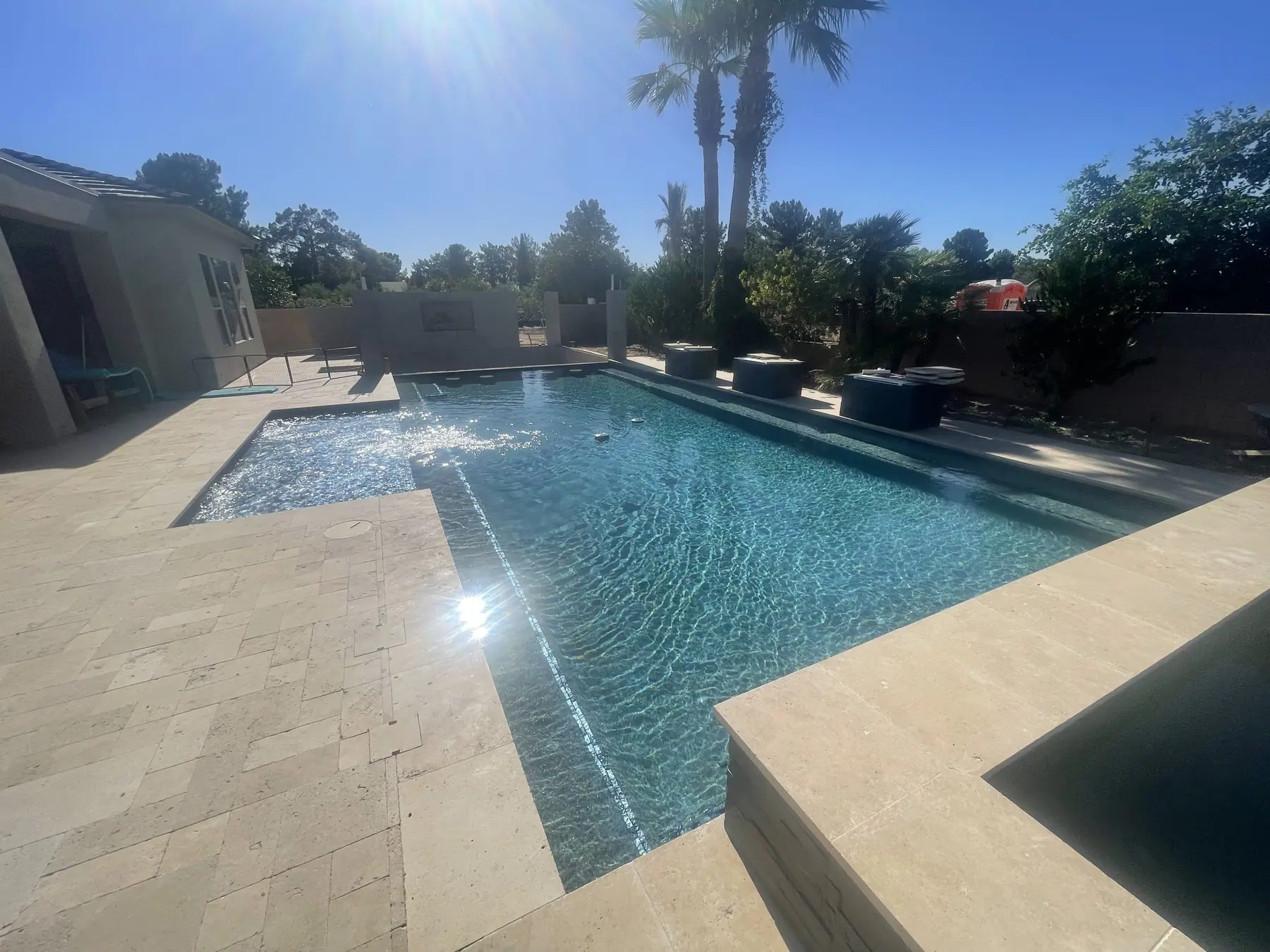
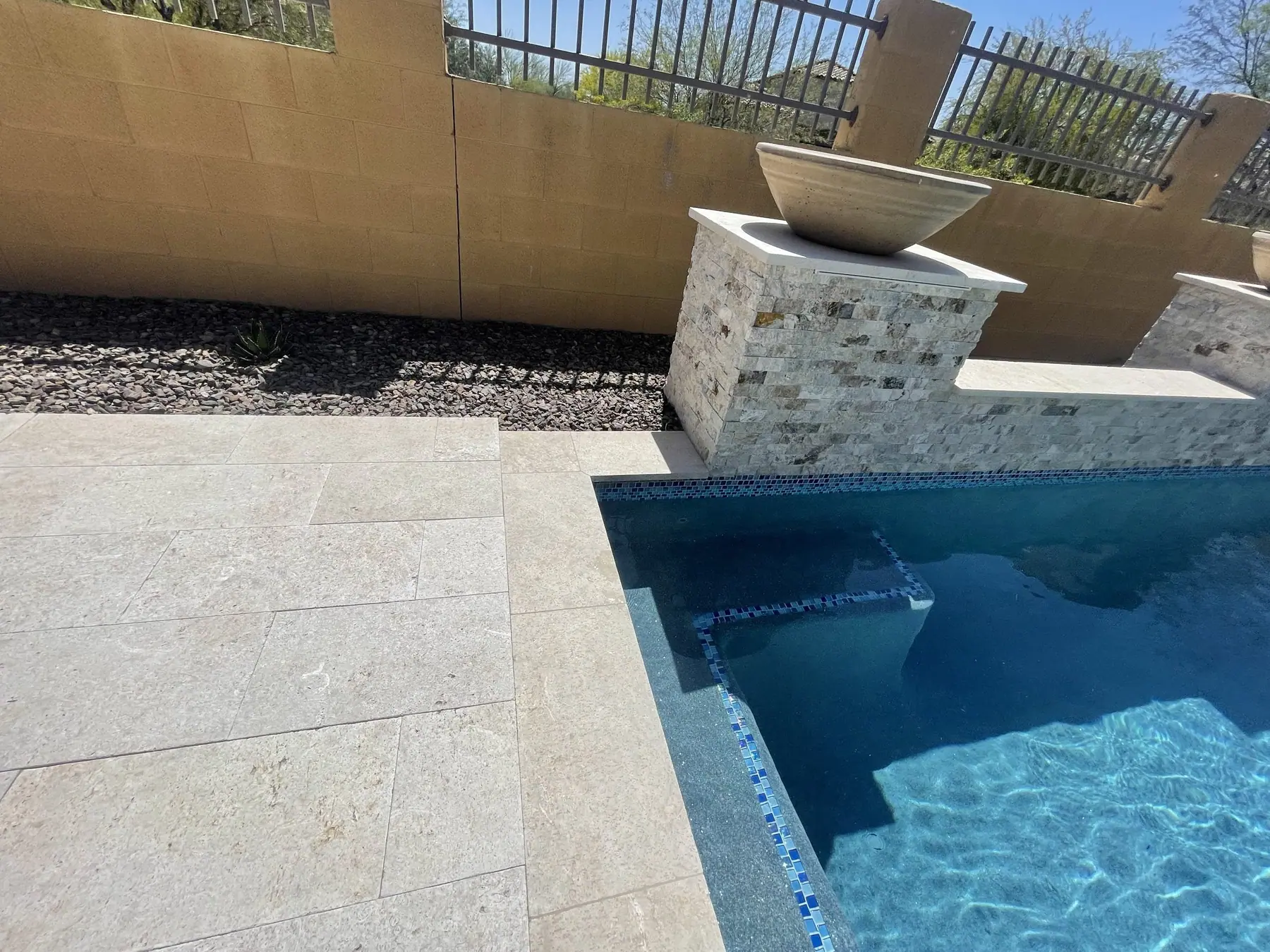
Barefoot comfort is not a luxury consideration here, it's a usability one. Poured concrete and dark pavers store heat and radiate it well into the evening. Light travertine runs dramatically cooler and stays comfortable underfoot far longer after sunset. If there's one place in an Arizona backyard where material choice pays off daily, it's the surface people walk on between the door, the shade, and the water.
Give the Space a Reason to Exist
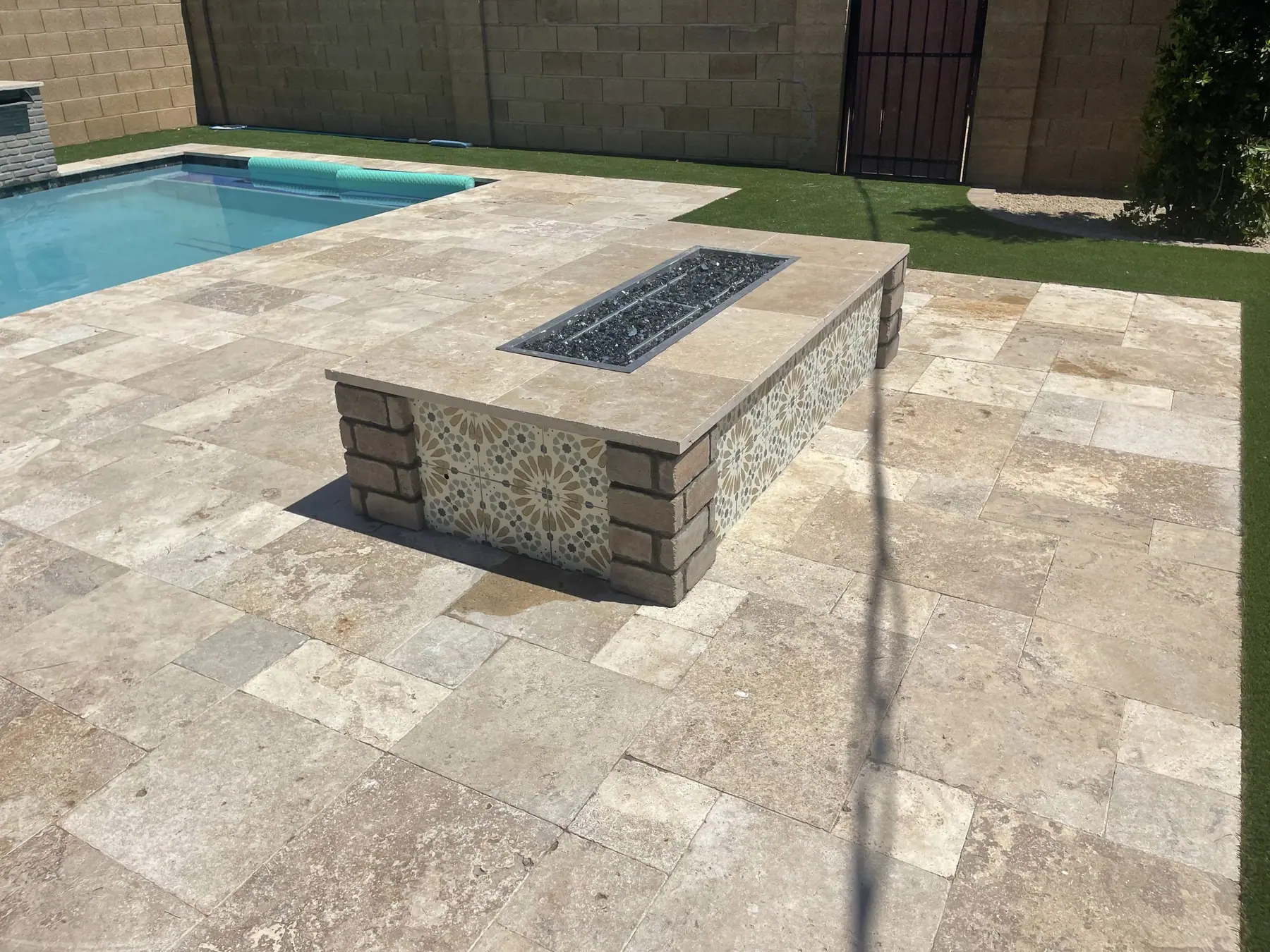
A backyard needs a destination. A grill against the wall is a chore station; a built-in island with bar seating is somewhere people gather. A portable fire bowl gets used twice; a built-in fire table with seating around it becomes the default winter evening spot. The common thread is permanence and seating — features you don't have to set up, positioned so people naturally face each other.
Plan the Whole Thing, Then Build in Phases
Designing the full yard up front and building it in stages is almost always better than designing each stage as you go. It lets you trench gas, water, and conduit once rather than cutting into finished hardscape later. It sets deck elevations correctly the first time. And it keeps the finished result looking like one coherent design instead of a timeline of separate decisions.
Don't Forget Lighting
Lighting is what extends every one of those reclaimed hours past sunset, and it's routinely underspecified. Low-voltage path lighting, uplights on trees and walls, and dimmable fixtures under the ramada cost very little relative to the rest of the project, and they change the character of the yard completely after dark. Run the conduit during the build — retrofitting lighting through finished hardscape and planting is far more expensive and never quite as clean.

AZ Outdoor Concepts
Phoenix's outdoor living, hardscape, and landscape contractor. A small, family-owned business led by Shawn Walker with over 18 years of experience turning ordinary Arizona backyards into shaded, usable, year-round living space.
Related Services
Planning a outdoor living project?
Get a free consultation and estimate from the Phoenix area's trusted outdoor living, hardscape, and landscape contractor.